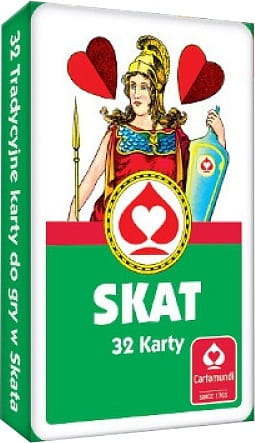
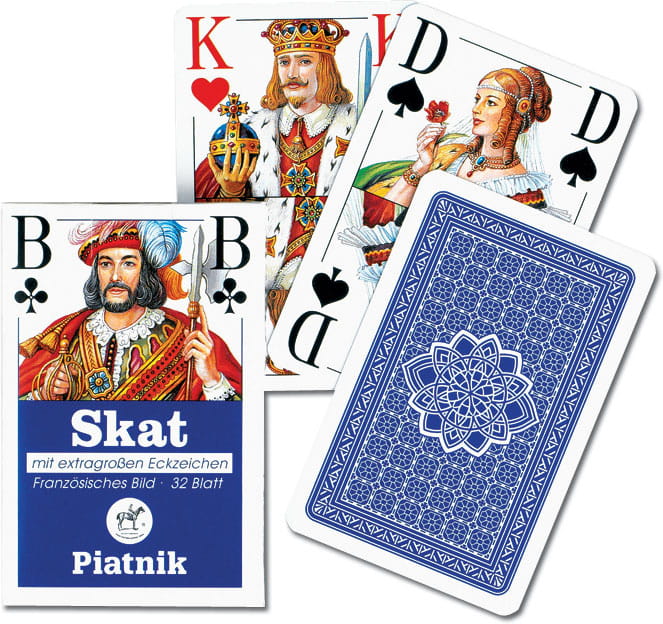
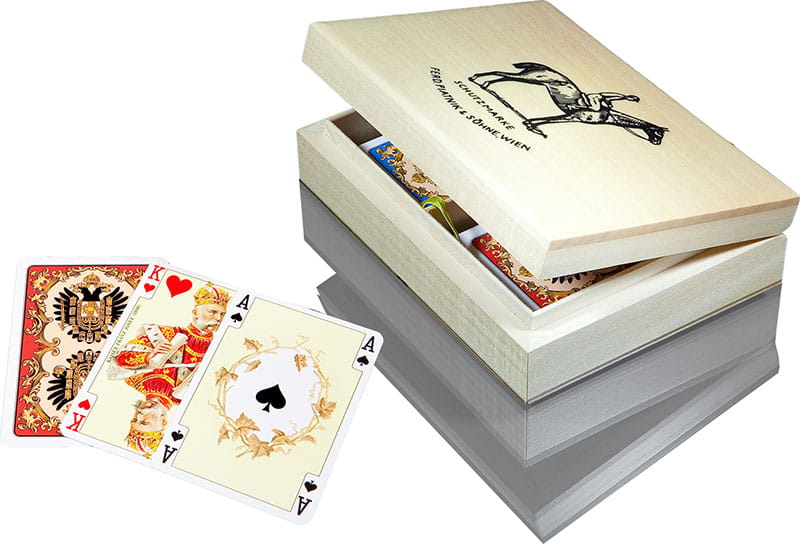
Skat, also known as the "Silesian Bridge", is a popular card game for 3 players, invented in the 19th century in Germany and popular especially in Silesia and Kashubia. The 32 cards contain the colors characteristic of the German deck, special images of figures and brochures depicting significant Polish cities. A game for demanding players who like entertainment that requires concentration and mental strain.
The game consists of 5 phases, and the goal of the game is to collect the most points and win the bidding. The player who wins the bidding may exchange his cards for a skate on the table. In order to win the bidding and collect the trick, you must declare the game score that is closest to the actual score. The lowest value in Skat is 18. Players determine the variant of the game - Color, Grand, Null, Play by hand, Games announced and bid according to its rules. In a game, two players always play against one (the Soloist), and if one of the sides fails to collect a trick - a scam is called.
Auction
The bidding is started by the player in the middle by asking the Ancestor (18 points? A: Do I have 20 points? A: I have, etc. until one of them passes). When one of them passes, the player on the backside enters the auction. Of course, he should bid more than his predecessor or pass. When neither player opens the bidding (three lanes), the cards are thrown and the next player shuffles them for the next deal. The points referred to in the auction result from the point value of the game that the soloist intends to win. Do not confuse game points (calculated by multiplying numbers) with stitches (points worth each card, e.g. queen: 3, king: 4, etc.).
Cards are grouped in 4 colors:
- clubs (cut)
- spades (grin)
- heart (hertz)
- diamonds (szel)
Box Contents: